Local Interior Design Trends: What's Hot Near Me Right Now
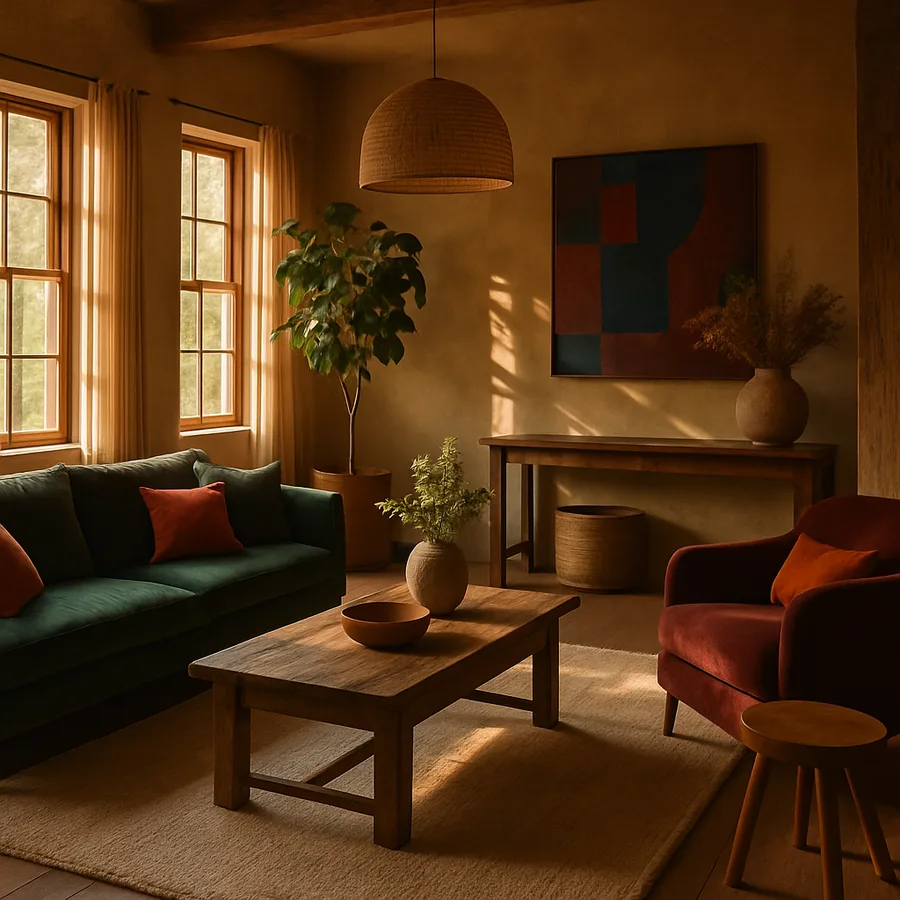
Interior design trends have always moved in waves, but the current landscape is defined by something new: a powerful emphasis on locality. Homeowners are no longer content to replicate a generic look pulled from a national magazine spread. Instead, they want spaces that reflect the character, climate, materials, and culture of the places where they actually live. The American Society of Interior Designers (ASID) has identified "regional authenticity" as one of the defining movements in contemporary residential design, noting that 67% of homeowners now prioritize locally sourced materials and regionally inspired aesthetics over mass-market uniformity. This shift is reshaping how designers approach every project, from material selection to spatial planning to the way rooms connect with their surrounding environments.
Understanding what is trending in your specific area requires looking beyond the glossy national publications and paying attention to local showrooms, regional design events, and the work of designers rooted in your community. The International Interior Design Association (IIDA) emphasizes that trends are always filtered through local context, meaning a movement like warm minimalism will manifest very differently in a coastal California bungalow than in a Minnesota farmhouse. This article explores the major design movements gaining momentum across communities nationwide, with guidance on how to interpret and apply them within your own local context. What does your neighborhood look like through the lens of contemporary design, and how can your home participate in that conversation?
Warm Minimalism: Restraint with Soul
The stark, cold minimalism that dominated design media for years has given way to a softer, more approachable interpretation that designers are calling warm minimalism. This trend retains the decluttered spatial clarity that made minimalism popular while introducing warmth through natural materials, organic textures, and a palette rooted in earth tones rather than stark whites and grays. ASID trend forecasters describe warm minimalism as "minimalism that has learned to exhale," a philosophy that values breathing room without sacrificing comfort or personality. In practice, this means rooms with fewer pieces of furniture, each one chosen for quality and character, arranged to maximize both function and visual calm.
Local interpretations of warm minimalism vary enormously. In regions with strong woodworking traditions, the trend manifests through handcrafted furniture in native hardwoods, their grain patterns and natural imperfections celebrated rather than concealed. In areas with rich textile histories, warm minimalism might feature a single stunning woven piece, perhaps a handloomed rug or a tapestry from a local fiber artist, serving as the room's focal point against otherwise restrained surroundings. The National Council for Interior Design Qualification (NCIDQ) curriculum now includes substantial training on regional material sourcing, reflecting the profession's recognition that the best design emerges from a deep understanding of place. A warm minimalist room in your area should feel like it could not exist anywhere else.
Adopting warm minimalism in your own home begins with an honest audit of what you own and what you actually use. The editing process is the foundation of any minimalist approach, but warm minimalism asks you to edit with heart rather than ruthlessness. Keep the items that genuinely serve your daily life or bring you meaningful pleasure, and release those that simply occupy space. Then, invest in quality replacements where needed, prioritizing local makers and natural materials wherever possible. Houzz surveys indicate that homeowners who adopt warm minimalism report spending 25% less on furnishings over time because they buy fewer, better items that last longer and satisfy more deeply. Have you ever calculated how much of your home's square footage is dedicated to objects you neither use nor love?
Biophilic Design: Bringing Nature Indoors
Biophilic design, the practice of integrating natural elements into built environments, has moved from a niche concept to a mainstream expectation in residential interiors. The underlying principle is supported by robust research: humans have an innate need to connect with nature, and spaces that facilitate this connection measurably improve well-being, cognitive function, and emotional regulation. A landmark study referenced by ASID found that incorporating biophilic elements into residential spaces reduced reported stress levels by 37% and improved self-reported sleep quality by 15%. These are not marginal improvements; they represent significant enhancements to daily quality of life, achieved through design choices rather than medication or behavioral change.
The local dimension of biophilic design is particularly important because the most authentic expressions of this trend draw on the specific natural environment of your region. In the Pacific Northwest, biophilic design might emphasize moss, ferns, and the deep greens of temperate rainforests, using reclaimed Douglas fir and volcanic stone. In the Southwest, the palette shifts to desert succulents, warm sandstone, and terracotta, with design choices that honor the beauty of arid landscapes. IIDA design guidelines stress that biophilic design is most effective when it creates a continuity between interior and exterior environments, making the boundaries between inside and outside feel permeable and natural. A potted tropical plant in a Minnesota living room is pleasant, but a room designed around native prairie grasses and local fieldstone is transformative.
Practical biophilic design encompasses far more than houseplants, though plants are certainly part of the equation. Natural light management, views of outdoor greenery, the use of natural materials like wood, stone, wool, and linen, water features, and even the incorporation of natural patterns and forms into furniture and textiles all contribute to a biophilic environment. Living walls, indoor herb gardens in kitchen spaces, and large-format windows that frame landscape views like living paintings are all expressions of this trend. NCIDQ-certified designers are trained to assess natural light conditions, ventilation patterns, and view opportunities as foundational elements of any design plan, ensuring that biophilic principles are integrated structurally rather than applied decoratively as an afterthought.
Artisan Revival: The Return of Handmade
Across communities nationwide, there is a powerful resurgence of interest in handmade, artisan-crafted interior elements. This trend is driven by multiple factors: a desire for uniqueness in an age of mass production, growing awareness of the environmental costs of disposable furnishings, and a genuine appreciation for the skill, time, and tradition embedded in handcrafted objects. Houzz market research shows that searches for "handmade furniture" and "local artisan decor" have increased by 58% over recent measurement periods, reflecting a significant shift in consumer priorities. The IIDA has responded by creating programs that connect interior designers with regional craftspeople, facilitating collaborations that benefit both parties and enrich the built environment.
The artisan revival manifests differently depending on the craft traditions of your area. Communities with strong pottery traditions are seeing ceramicists collaborate with designers on custom tile work, tableware, and sculptural objects. Regions with metalworking heritage are producing bespoke light fixtures, hardware, and furniture frames. Areas with textile traditions are generating handwoven rugs, custom upholstery, and artisanal window treatments. What unites these diverse expressions is a shared commitment to human skill over machine efficiency, to individual character over uniform replication, and to economic relationships that keep money circulating within communities. When you commission a dining table from a local woodworker, you are not just buying furniture; you are investing in your community's cultural infrastructure.
Incorporating artisan pieces into your home does not require a complete overhaul. Even a single handcrafted element can anchor a room's identity and elevate mass-produced surroundings. A hand-thrown ceramic vase on a factory-made shelf, a custom-forged door handle on a standard door, or a locally woven throw on a retail sofa introduces a layer of authenticity that transforms the entire space. ASID encourages homeowners to build relationships with local makers gradually, adding one meaningful piece at a time rather than attempting to furnish entirely with custom work, which can be prohibitively expensive. Over years, this approach creates a home that tells a story of place, community, and personal curation that no single shopping trip could achieve.
Bold Texture Mixing: Beyond Visual Pattern
While color has long dominated conversations about interior design trends, the current moment belongs to texture. Designers are combining rough and smooth, matte and glossy, woven and polished surfaces to create rooms that engage the sense of touch as powerfully as they engage the eye. ASID's sensory design research indicates that rooms with diverse tactile experiences are perceived as 40% more "comfortable" and "inviting" than rooms with uniform surface quality, even when spatial dimensions, lighting, and color are held constant. This finding underscores a truth that designers have intuitively understood for generations: we experience spaces with our whole bodies, not just our eyes, and texture is the primary medium of tactile experience.
Local material availability strongly influences how texture mixing manifests in different regions. Coastal areas might combine smooth sea glass, rough driftwood, woven seagrass, and polished shell in a single room. Mountain communities could juxtapose rough-hewn timber, smooth leather, nubby wool, and cold-to-the-touch stone. Urban environments often play with industrial textures like exposed concrete, brushed steel, and raw brick alongside soft velvets, silky linens, and plush rugs. The NCIDQ training framework includes extensive material science education, ensuring that certified designers understand not just how textures look but how they perform: how they wear over time, how they respond to humidity and light, and how they feel against skin in different seasons.
Creating a successfully textured room requires thinking in layers, much like dressing for variable weather. Begin with the room's architectural textures, walls, floors, and built-in surfaces, which establish the tactile foundation. Then add furniture with contrasting surface qualities: a smooth marble-topped table with rough-textured wooden legs, or a sleek leather chair paired with a chunky knit throw. Finally, layer in accessories and textiles that introduce additional tactile variety: a hammered metal bowl, a woven basket, a glass vase, a linen napkin. The goal is a room that your hands want to explore, where every surface offers a different sensation. What would it feel like to walk through your living room with your eyes closed, experiencing it purely through touch?
Color Drenching: Immersive Single-Tone Rooms
One of the most dramatic local trends gaining momentum is color drenching, the practice of painting walls, ceiling, trim, and sometimes even the floor in a single enveloping hue. This technique creates an immersive, cocoon-like atmosphere that transforms a room's perceived proportions and emotional character. IIDA trend analysts describe color drenching as a reaction against the open-plan, neutral-palette aesthetic that dominated for over a decade, representing a desire for spaces that feel distinct, intimate, and emotionally specific. Rather than flowing seamlessly from one room to the next, color-drenched rooms announce themselves as individual experiences, each with its own mood and purpose.
The colors chosen for drenching tend to reflect regional light conditions and cultural associations. Northern climates with limited natural light often gravitate toward deep, warm tones like terracotta, burgundy, and forest green, which create a sense of warmth and enclosure that feels protective during long, dark months. Sun-drenched regions might choose saturated versions of sky blue, sage green, or warm coral that harmonize with the abundant natural light rather than competing with it. Houzz data reveals that color-drenched rooms are among the most saved and shared images on the platform, suggesting that even homeowners who have not yet tried the technique are deeply attracted to it. ASID color consultants recommend testing drenching colors with large sample areas observed across multiple times of day, because the technique amplifies every nuance of a color's interaction with light.
If you are considering color drenching in your own home, start with a small, self-contained room where the impact will be powerful but the commitment is manageable. A powder room, a home office, or a dining room are excellent candidates because they are spaces where you spend defined periods of time rather than entire days. Choose a color that genuinely resonates with you emotionally, not one that merely looks appealing in a magazine. Live with it mentally for a few weeks before committing. Then commit fully: walls, ceiling, trim, and door, all in the same shade or closely related tones. The magic of color drenching comes from its totality; painting only the walls while leaving the ceiling and trim white defeats the purpose and simply looks unfinished in this context.
Flexible Living: Rooms That Adapt
The way people use their homes has changed fundamentally, and interior design trends are responding with an emphasis on flexibility and adaptability. Rooms that serve a single fixed purpose are giving way to spaces that can transform throughout the day: a dining room that becomes a workspace, a living room that converts to a guest bedroom, a kitchen island that functions as a homework station. NCIDQ design standards increasingly emphasize "temporal flexibility," the ability of a space to serve different functions at different times without requiring physical renovation. This trend is particularly strong in urban areas where square footage is limited, but it resonates everywhere that homeowners want more from their spaces.
Local housing stock significantly influences how flexible design is implemented. In older homes with defined, separate rooms, flexibility often means rethinking furniture choices to enable multiple uses within each room: a desk that doubles as a vanity, a daybed that serves as both sofa and guest bed, or a dining table with adjustable height for both meals and standing work. In newer open-plan homes, flexibility is achieved through zoning techniques, using rugs, lighting, furniture arrangement, and movable screens to define distinct functional areas within a larger space. IIDA design research shows that homes incorporating flexible design principles report 29% higher satisfaction in households with multiple residents, because the spaces accommodate diverse needs without requiring anyone to compromise consistently.
Investing in flexible design is often more cost-effective than it initially appears. A single high-quality convertible piece can replace two or three single-purpose items, saving both money and floor space. Murphy beds, extendable dining tables, modular seating systems, and nesting side tables are all examples of flexible furniture that has matured beyond its space-saving origins into genuinely beautiful, design-forward territory. ASID reports that the market for multifunctional residential furniture has grown by over 50% in recent cycles, driven by both practical need and aesthetic innovation from manufacturers responding to designer demand. The most exciting local showrooms in your area are likely featuring flexible pieces prominently; visiting them can inspire solutions you had not previously considered.
Conclusion: Making Trends Your Own
The interior design trends shaping homes in communities nationwide share a common thread: they prioritize authenticity, sensory richness, and responsiveness to actual human needs over superficial aesthetics or rigid stylistic rules. Whether you are drawn to the restrained warmth of warm minimalism, the natural connection of biophilic design, the character of artisan craftsmanship, the sensory depth of texture mixing, the bold immersion of color drenching, or the practical intelligence of flexible living, the most important step is interpreting these trends through the lens of your own life, your own region, and your own values. A trend adopted without personal adaptation is just imitation; a trend filtered through genuine self-knowledge becomes authentic design.
Local designers, regional showrooms, community craft fairs, and neighborhood architecture walks are all resources for understanding how these national movements are manifesting in your specific area. ASID, IIDA, and Houzz all provide tools for exploring regional design activity, connecting with local professionals, and gathering inspiration rooted in real spaces rather than staged photographs. The trends outlined here are not prescriptions but invitations, starting points for a creative process that should ultimately reflect the unique character of your home and your community.
Choose one trend that resonates with you most strongly and implement a single, concrete change this month. Visit a local artisan market and bring home one handmade piece. Paint a small room in a bold, enveloping color. Introduce a collection of natural textures to your living room. Start small, stay local, and let your home evolve into an honest expression of where and how you live.
More Articles You May Like



Comments
Post a Comment