H Must-Have Elements for Modern Interior Design
Modern interior design has never been a static concept, and the elements that define it continue to evolve as technology advances, sustainability becomes non-negotiable, and our understanding of wellness deepens. The International Interior Design Association (IIDA) defines modern design not by a specific aesthetic but by a commitment to function, honesty of materials, and responsiveness to how people actually inhabit their spaces. With average room redesigns costing between $5,000 and $15,000 and professional consultation fees ranging from $150 to $500 per hour, knowing which elements carry genuine design weight versus which are passing novelties can save both money and regret. The ten elements presented here have earned their place through documented impact on spatial quality, occupant wellbeing, and long-term design relevance. Whether you are renovating a single room or planning a whole-home transformation, these are the building blocks of a modern interior that will remain compelling for years.
Sustainable and Reclaimed Materials
Sustainability has moved from a niche concern to a central pillar of modern design practice. The ASID's 2023 Outlook Report found that 72% of design professionals now consider environmental impact a primary factor in material specification, up from just 38% five years prior. Reclaimed wood flooring, recycled glass countertops, low-VOC paints, and textiles woven from regenerated fibers are no longer premium specialty items; they are becoming standard selections for designers who understand that responsible sourcing and aesthetic excellence are not mutually exclusive.
Reclaimed materials carry a visual richness that manufactured alternatives struggle to replicate. A dining table crafted from salvaged barn timber bears the marks of its history, with grain patterns, nail holes, and weathering that tell a story no factory finish can imitate. Similarly, recycled metal fixtures develop patinas and variations that give each piece a distinct character. AD PRO's materials editor highlighted the growing market for "pre-loved" architectural salvage, noting that reclaimed doors, mantels, and hardware are commanding premium prices precisely because of their uniqueness and provenance.
For homeowners beginning to incorporate sustainable materials, start with the surfaces that see the most daily interaction: flooring, countertops, and seating textiles. These are the elements your hands and feet touch constantly, making their material quality directly experiential rather than purely visual. The NCIDQ now includes sustainable design competencies in its certification framework, and many certified professionals maintain databases of vetted sustainable suppliers sorted by region and material type. Requesting a sustainability-focused specification is no longer unusual; it is increasingly expected by informed clients.
Statement Lighting as Sculptural Art
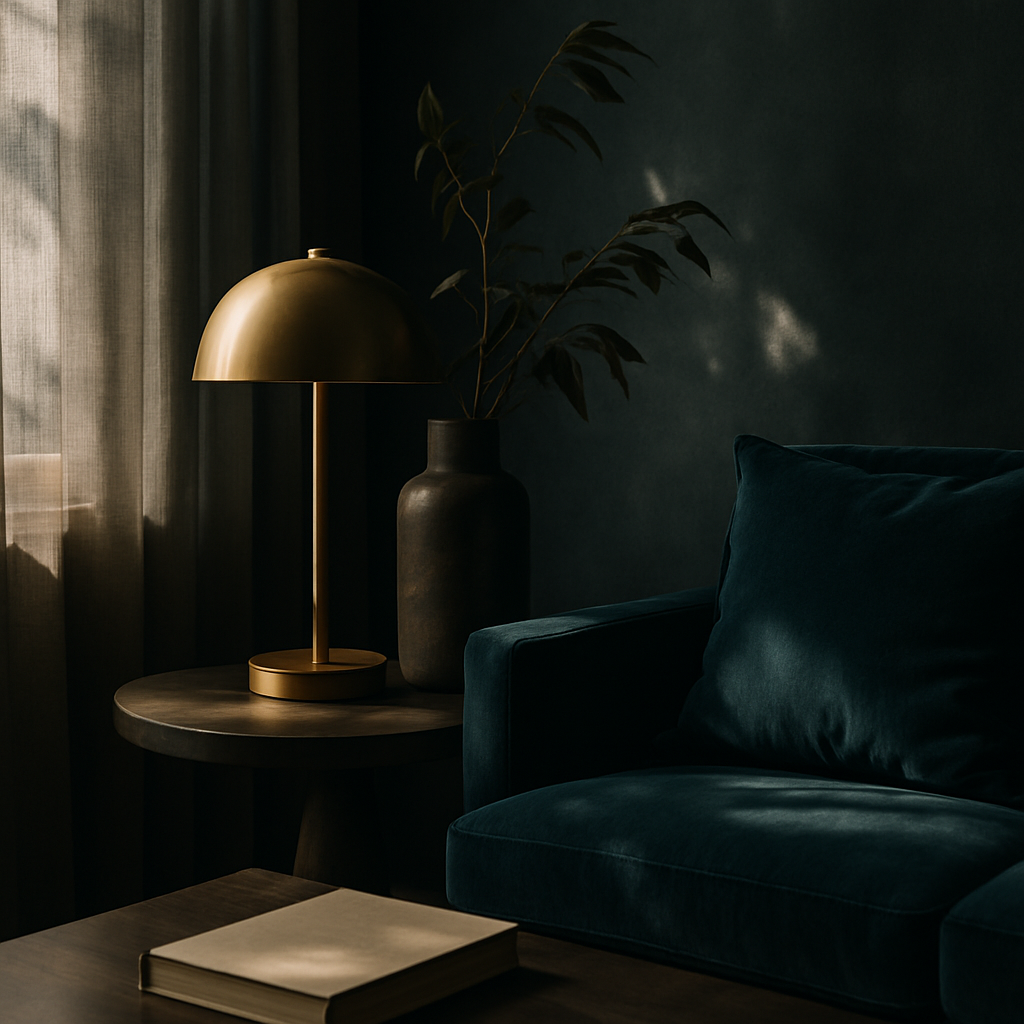
Lighting has transcended its utilitarian origins to become one of the most expressive elements in modern interiors. A single well-chosen pendant, chandelier, or sculptural floor lamp can define a room's character as decisively as any piece of furniture. The IIDA's residential trend report noted that designer lighting searches increased by 45% in 2023, driven partly by social media visibility and partly by a genuine recognition that lighting quality affects mood, productivity, and spatial perception in measurable ways.
The most effective statement lighting pieces operate on two registers simultaneously. As functional objects, they provide the specific quality, color temperature, and distribution of light that the space requires. As sculptural forms, they contribute shape, material interest, and visual gravity independent of whether they are illuminated. An oversized woven rattan pendant above a dining table casts warm, patterned shadows when lit and serves as an organic focal point when off. A cluster of hand-blown glass globes at varied heights over a kitchen island creates a kinetic composition that draws the eye whether or not the bulbs are on.
Layering remains essential even when a statement fixture anchors the room. The ASID recommends supplementing any dramatic overhead piece with task-appropriate fixtures: reading lamps beside seating, under-cabinet strips in kitchens, and recessed downlights on dimmer circuits for ambient control. This layered approach ensures that the statement fixture is free to operate at its most flattering intensity rather than being forced to provide all of the room's illumination. Have you ever noticed how a beautifully designed restaurant achieves its atmosphere primarily through lighting? That same principle applies to your home, and it is more accessible than most homeowners realize.
Mixed Metals and Intentional Hardware
The era of matching every metal finish in a room to a single tone has given way to a more nuanced approach. Modern interiors in 2023 embrace the deliberate mixing of metals, combining brushed brass with matte black, polished nickel with aged bronze, or copper accents with satin gold. The NCIDQ's residential design guidelines frame this not as a license for randomness but as an opportunity for intentional contrast. Each metal brings a specific visual temperature and texture, and combining two or three creates depth and sophistication that a single finish cannot achieve.
Hardware, the knobs, pulls, hinges, and brackets that furnish cabinets, doors, and shelving, has emerged as a surprisingly impactful design element. Houzz reported that cabinet hardware replacement is the single most common kitchen update, undertaken in 61% of kitchen refreshes. The reason is simple: hardware sits at eye level and hand level, making it one of the most frequently seen and touched surfaces in any room. Swapping standard-issue chrome pulls for sculpted brass handles or replacing round knobs with ribbed leather-wrapped cylinders elevates the sensory experience of interacting with your own home.
When mixing metals, designers recommend anchoring the room with one dominant finish, applied to the largest metal elements such as light fixtures and major hardware, and introducing one or two accent metals through smaller items like picture frames, shelf brackets, or cabinet pulls. This hierarchy prevents the combination from reading as accidental. The IIDA suggests maintaining a roughly 70/20/10 ratio among metals, mirroring the color proportion framework. The dominant metal sets the tone, the secondary metal provides counterpoint, and the accent metal sparks visual interest in small, unexpected moments.
Indoor-Outdoor Connectivity
The boundary between interior and exterior space has thinned considerably, and modern design actively cultivates that permeability. Full-height sliding glass doors, covered outdoor living rooms, and interior courtyards that bring sky and vegetation into the heart of the floor plan all reflect a commitment to connecting inhabitants with the natural world beyond their walls. The ASID found that homes with strong indoor-outdoor connections scored 29% higher on occupant wellbeing assessments than comparable homes with conventional window configurations.
Materials play a key role in bridging the transition. Continuing the same flooring material from an interior living area onto an adjacent terrace eliminates the visual break that a threshold typically creates, making both spaces read as one continuous environment. Similarly, using exterior-grade versions of interior furniture fabrics allows seating to migrate between inside and outside without jarring aesthetic shifts. Plants positioned near glass boundaries further dissolve the edge, creating a gradient from built environment to natural landscape that the eye follows effortlessly.
For homeowners without expansive outdoor areas, the principle still applies at smaller scales. A balcony furnished as a genuine room extension with a weather-resistant rug, proper seating, and task lighting transforms from afterthought to asset. A kitchen window fitted with a deep sill and herb planters creates a micro-garden that introduces living greenery into daily cooking routines. AD PRO profiled several urban apartments where designers used Juliet balconies and floor-to-ceiling windows to achieve a sense of outdoor connection in spaces with zero exterior square footage. What opportunities does your home offer for strengthening the dialogue between inside and outside?
Textural Layering and Tactile Diversity
Modern design has evolved beyond visual composition to embrace the full sensory spectrum, with tactile quality occupying an increasingly central position. A room that looks beautiful in photographs but feels cold, slippery, or monotonous underfoot and under hand fails the lived-experience test. The IIDA's 2023 wellness design framework emphasizes "haptic richness," the deliberate incorporation of varied textures that reward physical interaction and ground occupants in the present moment. Bouclé, raw linen, hand-thrown ceramic, brushed concrete, nubby wool, and oiled leather each contribute a distinct tactile signature.
Layering textures follows many of the same principles as layering color or lighting. A foundation of smooth, consistent surfaces, polished floors, painted walls, sleek cabinetry, provides the neutral baseline. Atop that foundation, progressively richer textures introduce warmth and complexity: a chunky knit throw on a leather sofa, a jute rug over hardwood, a textured ceramic vase on a marble shelf. Each layer adds depth without necessarily adding color, making textural layering an especially powerful strategy in neutral-palette interiors where visual interest must come from surface quality rather than chromatic variety.
The ASID recommends including at least five distinct textures in any room to achieve a satisfying level of tactile diversity. Count them in your living room right now: wall finish, flooring, upholstery, window treatment, and at least one accessory or accent piece should each contribute a different tactile quality. If the count falls short, the room likely feels flatter and less inviting than its layout and color scheme would suggest. Introducing even one additional texture, a woven basket for magazines, a ribbed glass vase, a stone coaster set, can shift the room's character from visually complete to sensorially engaging.
Flexible and Modular Spaces
The modern home is no longer a collection of fixed-function rooms. The pandemic permanently accelerated the trend toward flexible spaces that adapt to shifting needs throughout the day: a dining table that converts into a workspace by morning, a guest room that serves as a yoga studio between visits, a living room that reconfigures from family movie night to adult entertaining within minutes. Houzz's post-pandemic design survey found that 58% of homeowners now prioritize flexibility over dedicated-purpose rooms when renovating.
Modular furniture systems are the primary enablers of this flexibility. Sectional sofas with movable components, nesting tables that expand or compact as needed, and rolling storage units that migrate between rooms all support the fluid use patterns that modern life demands. The NCIDQ has introduced "adaptive design" as a formal competency area, recognizing that the ability to create spaces that serve multiple functions without compromising any of them is now a core professional skill rather than a specialized niche.
Technology supports spatial flexibility in less visible ways. Retractable screens that lower from ceiling-mounted housings can partition an open room for a video conference and disappear entirely when the meeting ends. Motorized pendant lights that adjust height transform a high-ceilinged great room from airy gathering space to intimate dining area. Even simple solutions like a projector and a blank wall can turn a living room into a cinema without the permanent footprint of a large television. The underlying design philosophy is permission to change: rooms should invite reconfiguration rather than resisting it, and every furniture selection should be evaluated not only for what it does today but for what it could do tomorrow.
Conclusion: Building a Modern Home That Endures
The ten elements outlined above share a common characteristic: each responds to genuine human needs rather than surface-level trend cycles. Sustainable materials address environmental responsibility and aesthetic longevity. Statement lighting elevates daily experience. Mixed metals add depth. Indoor-outdoor connectivity supports wellbeing. Textural layering satisfies our need for sensory richness. Flexible spaces honor the reality that our lives are not static. Together, these elements form a vocabulary for modern living that transcends any single year's forecast.
Adopting all ten simultaneously is neither necessary nor advisable. Instead, identify the three or four that address the most significant gaps in your current home. If your lighting is flat and uninspiring, invest in a statement fixture and supplementary layers. If your surfaces all share the same smooth finish, introduce tactile contrast through textiles and accessories. If your home resists the ways you actually use it, explore modular furniture that grants permission to reconfigure. Each targeted intervention compounds over time, building toward a home that is genuinely modern in the deepest sense: responsive, honest, and attuned to how you live.
Consult with an IIDA- or NCIDQ-affiliated professional to prioritize your investments. A two-hour planning session at standard rates can produce a phased roadmap that sequences improvements for maximum impact within your budget. Document your home's current state with photographs and measurements, note the elements from this list that resonate most strongly, and bring that information to the consultation. The result will be a clear, actionable plan that transforms your space not according to someone else's vision, but according to the intersection of professional expertise and your own lived experience of home.



Comments
Post a Comment