H Home Interior Design Trends You Can't Afford to Miss
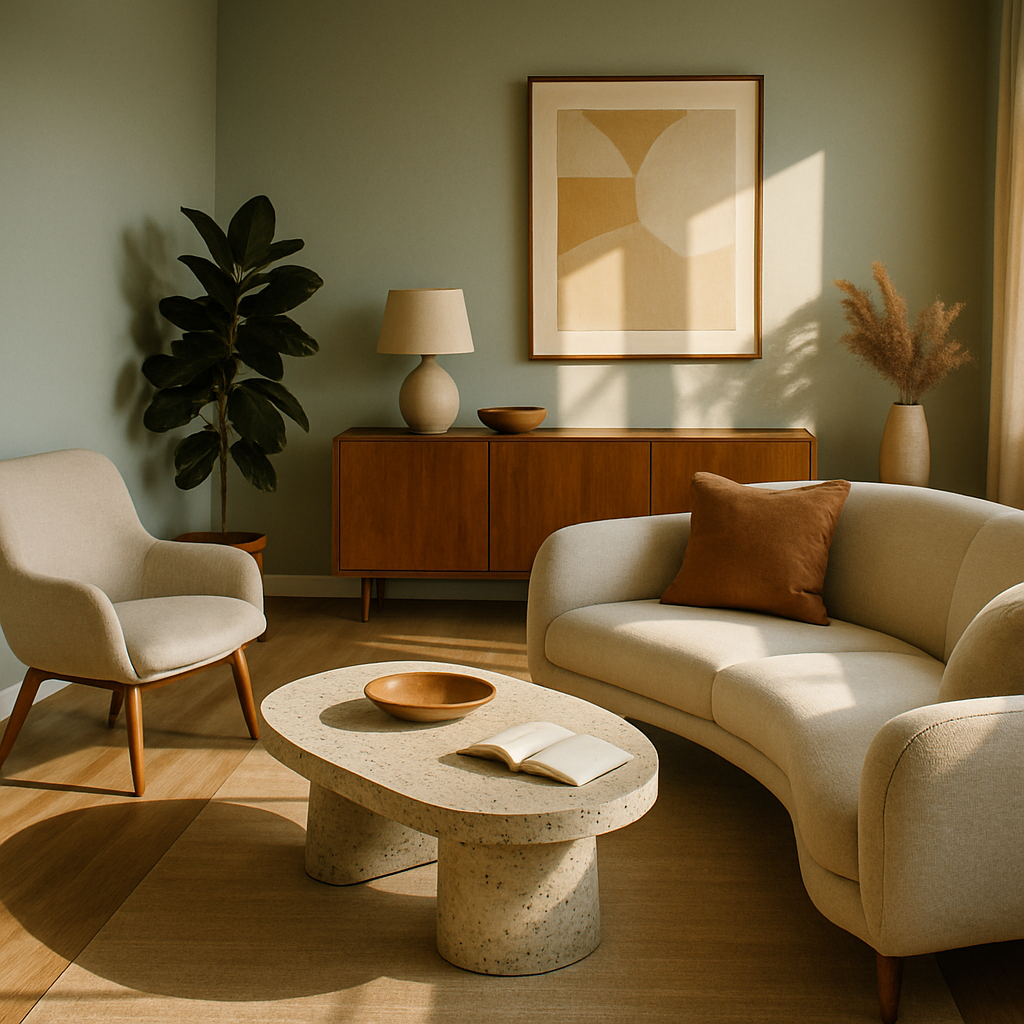
Home design preferences rarely shift overnight, but when multiple cultural, economic, and technological forces converge, the pace of change accelerates noticeably. The past year brought a recalibration in how homeowners think about their living environments, moving away from purely visual appeal and toward spaces that perform on emotional, functional, and environmental levels simultaneously. Houzz's annual home design survey revealed that 67 percent of renovating homeowners cited "daily comfort and well-being" as their primary motivation, surpassing resale value for the first time in the survey's history. The ten trends discussed below emerged from this shift, and each one offers a different lens through which to evaluate and improve your home. Understanding the reasoning behind each movement will help you invest wisely rather than chase fleeting aesthetics that lose their appeal within a season.
Curved Furniture Softens Rigid Architecture
Angular, hard-edged furniture dominated residential interiors for much of the past decade, driven by the industrial and mid-century modern revivals. The pendulum has swung decisively toward curves. Rounded sofas, kidney-shaped coffee tables, arched bookcases, and circular dining tables now populate showroom floors from budget retailers to bespoke ateliers. The American Society of Interior Designers (ASID) documented a 38 percent increase in specification of curved upholstery pieces across member firms, reflecting genuine commercial traction rather than editorial speculation. The appeal is both visual and tactile: curves soften the rigid geometry of most residential architecture, creating a sense of flow and approachability that sharp corners inherently resist.
From a spatial planning perspective, curved pieces can actually improve traffic flow. A rounded sofa in an open-plan living area eliminates the abrupt visual barrier that a straight-backed sectional creates, allowing the eye to travel smoothly from one zone to another. Circular dining tables accommodate flexible seating counts more gracefully than rectangular ones, an advantage for households that shift between intimate family meals and larger gatherings. Designers working with the International Interior Design Association (IIDA) have noted that clients frequently describe curved-furniture rooms as feeling larger and more relaxed than their square-edged predecessors, even when the total footprint remains identical.
If you are considering this trend, start with a single statement piece rather than overhauling an entire room. A sculptural accent chair with a curved back or an oval coffee table can introduce the organic language without requiring you to part with existing furniture. The key is proportion: exaggerated curves work best in rooms with generous floor area, while subtler arcs suit compact spaces. What piece of furniture in your living room feels visually heavy or obstructive? Replacing it with a curved alternative may be the single most effective change you can make this season, and it will likely remain relevant for years to come.
Warm Maximalism Challenges Minimalist Orthodoxy
Minimalism served the design world well as a corrective to the excesses of previous decades, but many homeowners have grown weary of its emotional austerity. Warm maximalism offers a middle path: layered, collected, and richly textured spaces that maintain a sense of coherence through disciplined color palettes and intentional curation. Unlike the chaotic maximalism of the 1990s, this iteration emphasizes quality over quantity. Each object, whether a vintage Moroccan rug, a hand-thrown ceramic vessel, or a stack of well-loved books, contributes to a narrative that feels personal and evolved rather than impulsive. AD PRO profiled several prominent residential projects this year that embraced warm maximalism, noting that client satisfaction scores consistently exceeded those of comparable minimalist schemes.
The practical advantage of this approach is its forgiving nature. Warm maximalism accommodates the inevitable accumulation of meaningful objects that occurs over a lifetime, framing them as assets rather than clutter. The trick is establishing a unifying thread, often a color family or material motif, that ties disparate elements together. A room anchored by warm neutrals such as camel, rust, olive, and burgundy can absorb an eclectic mix of furniture styles, art periods, and textile patterns without feeling disjointed. Strategic repetition of one or two accent colors across cushions, book spines, and artwork creates rhythmic consistency beneath the surface variety.
How many of your favorite possessions are currently stored away because they do not fit a particular aesthetic vision? Warm maximalism invites you to reconsider those items. A collection of travel souvenirs grouped on a dedicated shelf, framed family photographs arranged in a salon-style gallery wall, or inherited furniture pieces mixed with contemporary purchases all gain new relevance within this framework. The National Council for Interior Design Qualification (NCIDQ) has included curated maximalism techniques in its updated study materials, acknowledging that the ability to compose complex, layered interiors is a sophisticated design skill. Embrace the richness of what you already own and build outward from there.
Terrazzo Surfaces Experience a Renaissance
Terrazzo, the composite material of marble, quartz, granite, or glass chips set in a cementitious or resinous matrix, has returned from mid-century dormancy with renewed vigor. Once associated exclusively with institutional flooring, terrazzo now appears on countertops, backsplashes, shower walls, and even furniture surfaces. A 2023 Houzz kitchen trends study found terrazzo countertops among the top five most-searched surface materials, competing directly with quartz and marble for homeowner attention. The material's resurgence stems from several converging factors: its inherent durability, its capacity for custom color and chip combinations, and its sustainable credentials, since many manufacturers now use recycled glass and stone waste.
Modern terrazzo differs significantly from its mid-century ancestor. Today's formulations offer larger chip sizes that create bold, graphic patterns suited to contemporary aesthetics. Color options have expanded dramatically; pastel pink matrices with white marble chips, deep charcoal bases with brass aggregate, and sage green compositions with recycled glass fragments all demonstrate the material's versatility. Installation costs range from $15 to $80 per square foot depending on whether you select precast tiles or poured-in-place applications, making it accessible across a range of budgets. The poured option, while more expensive, eliminates grout lines entirely and can span seamless transitions between rooms.
Terrazzo's longevity is its most compelling practical argument. Properly sealed terrazzo floors in commercial buildings have lasted seventy years or more with minimal maintenance. That kind of lifecycle performance means the higher upfront cost per square foot translates to a lower cost per year of use than most competing materials. ASID members have increasingly specified terrazzo for mudrooms, laundry rooms, and entryways, areas subject to heavy wear where its resilience delivers the greatest return. Could your most trafficked surfaces benefit from a material that actually improves with age rather than degrading? Terrazzo deserves serious consideration if your renovation timeline extends beyond the next five years.
Earth Tones Dominate Color Selections
The reign of cool grays that defined the 2010s has conclusively ended, replaced by a warm, earth-toned palette inspired by natural landscapes. Terracotta, ochre, sage, clay, sienna, and mushroom now anchor paint selections, fabric ranges, and tile collections across every price point. IIDA's annual color forecast identified warm earth tones as the dominant residential palette for the third consecutive year, noting that the trend has moved past the early-adoption phase and into broad market acceptance. The psychological reasoning is intuitive: earth tones reference the colors we encounter in nature, triggering the same calming associations that drive biophilic design more broadly.
Applying earth tones effectively requires attention to balance and contrast. A room composed entirely of similar mid-tone browns and tans risks appearing muddy and undifferentiated. The solution is to anchor the palette with at least one deeper shade, such as espresso or charcoal, and at least one lighter value, such as cream or linen white. This tonal range creates the visual hierarchy that allows the eye to move purposefully through the space. Metallic accents in warm finishes like brushed brass, aged copper, or matte gold add luminosity without introducing competing color energy. Professional color consultants, who typically charge between $200 and $500 per session, can help you build a cohesive earth-tone scheme tailored to your specific lighting conditions.
One overlooked advantage of earth-toned interiors is their compatibility with virtually every furniture style. Whether your existing pieces lean Scandinavian, traditional, Art Deco, or rustic, earth tones provide a backdrop that harmonizes rather than conflicts. This universality makes the palette particularly attractive for homeowners who prefer to evolve their interiors gradually rather than executing a complete transformation in one project. What would happen if you repainted just one room in a warm clay or sage tone this weekend? The experiment costs less than two hundred dollars in materials and a single afternoon, yet the result often catalyzes a broader shift in how you perceive and inhabit your home.
Multifunctional Spaces Respond to Hybrid Living
The pandemic-driven work-from-home experiment permanently altered how households use their square footage. Rooms that once served a single purpose, a formal dining room, a guest bedroom, a separate home office, now need to flex between functions throughout the day. According to ASID's post-pandemic space utilization study, 54 percent of households report that at least one room in their home serves three or more functions weekly. This statistic underscores a design challenge that goes beyond aesthetics: creating spaces that transition gracefully between work, rest, socializing, and exercise without requiring physical reconfiguration every few hours.
Furniture and storage solutions designed for multifunctionality have responded to this demand. Murphy beds with integrated desk mechanisms, modular seating systems that reconfigure from conversation groupings to chaise lounges to guest sleeping surfaces, and rolling room dividers with integrated shelving all address the need for spatial flexibility. Built-in cabinetry with concealed workstations allows a living room to function as a professional office during business hours and a relaxation zone in the evening, with the transition requiring nothing more than closing a pair of doors. The investment in such cabinetry typically runs between $3,000 and $8,000 depending on complexity, but it effectively adds a room's worth of functionality without expanding the footprint.
Acoustic management deserves more attention than it typically receives in multifunctional planning. A room that serves as both a video conference space and a family entertainment area needs acoustic treatment that addresses both use cases. Upholstered wall panels, heavy curtains, and strategically placed bookshelves all dampen sound transmission while contributing positively to the room's visual character. Have you mapped how each room in your home actually gets used throughout a typical week? Creating that inventory is the first step toward optimizing your layout, and you may discover that a modest reconfiguration, not an expensive addition, is all your household needs.
Artisanal and Handcrafted Elements Signal Authenticity
Mass-produced uniformity is losing ground to objects that bear the visible marks of human hands. Hand-thrown ceramics with slight asymmetries, hand-knotted rugs with intentional irregularities, blown glass pendants with unique bubble patterns, and forged iron hardware with hammer texture all communicate a design sensibility that values process and provenance. Houzz data indicates that listings tagged with "handmade" or "artisanal" receive 52 percent more engagement than comparable machine-made alternatives, suggesting that consumers are willing to invest in objects with a story. The National Council for Interior Design Qualification (NCIDQ) has highlighted the growing importance of material provenance knowledge in professional practice, reflecting a market that increasingly asks "who made this and how?"
Supporting artisan production also carries economic and environmental benefits. Small-batch manufacturing typically generates less waste than industrial processes, uses locally sourced materials more frequently, and sustains traditional craft skills that might otherwise disappear. Many designers now maintain relationships with individual makers, commissioning custom pieces that become the signature elements of a project. A hand-carved wooden bowl on a dining table, a potter's one-of-a-kind planter on a windowsill, or a blacksmith's bespoke curtain rod may each cost more than their factory equivalents, but they contribute a layer of meaning and uniqueness that no algorithm-optimized product catalog can replicate.
Incorporating artisanal elements does not require replacing everything you own. Begin with high-visibility touchpoints: the dining table centerpiece, the entryway console, the master bedroom nightstand. A single handcrafted object in a prominent position elevates the perceived quality of the entire room by association. AD PRO has profiled several emerging artisan collectives that offer direct-to-consumer sales, making handcrafted goods more accessible than ever. What single object in your daily field of vision would benefit most from an upgrade to something made with genuine human care? That is where to start, and the satisfaction of owning something irreplaceable compounds over time.
Conclusion
The ten trends reshaping home interiors this year reflect a collective maturation in how we approach our living spaces. Curved furniture and warm maximalism invite sensory pleasure and personal expression. Terrazzo and earth tones demonstrate that durable materials and timeless color choices need not sacrifice visual interest. Multifunctional design acknowledges the reality of how modern households operate, while artisanal elements anchor our spaces in human connection and craft. Taken together, these movements suggest that homeowners are increasingly willing to think carefully, invest selectively, and prioritize lasting satisfaction over rapid turnover.
You do not need to adopt all ten trends simultaneously. Instead, identify the two or three that resonate most strongly with your lifestyle and current dissatisfactions. Consult with a qualified interior designer if you want to ensure that your selections integrate cohesively; most firms offer initial consultations for a fixed fee that typically ranges from $250 to $750. The best interiors are never finished, they evolve alongside the people who live in them. Pick one trend from this list, commit to a single tangible action this month, and let momentum carry you forward. The space you create should feel like an honest extension of who you are, not a replica of someone else's vision.



Comments
Post a Comment