Cat Litter Box Hidden Inside Bench or Cabinet for Style
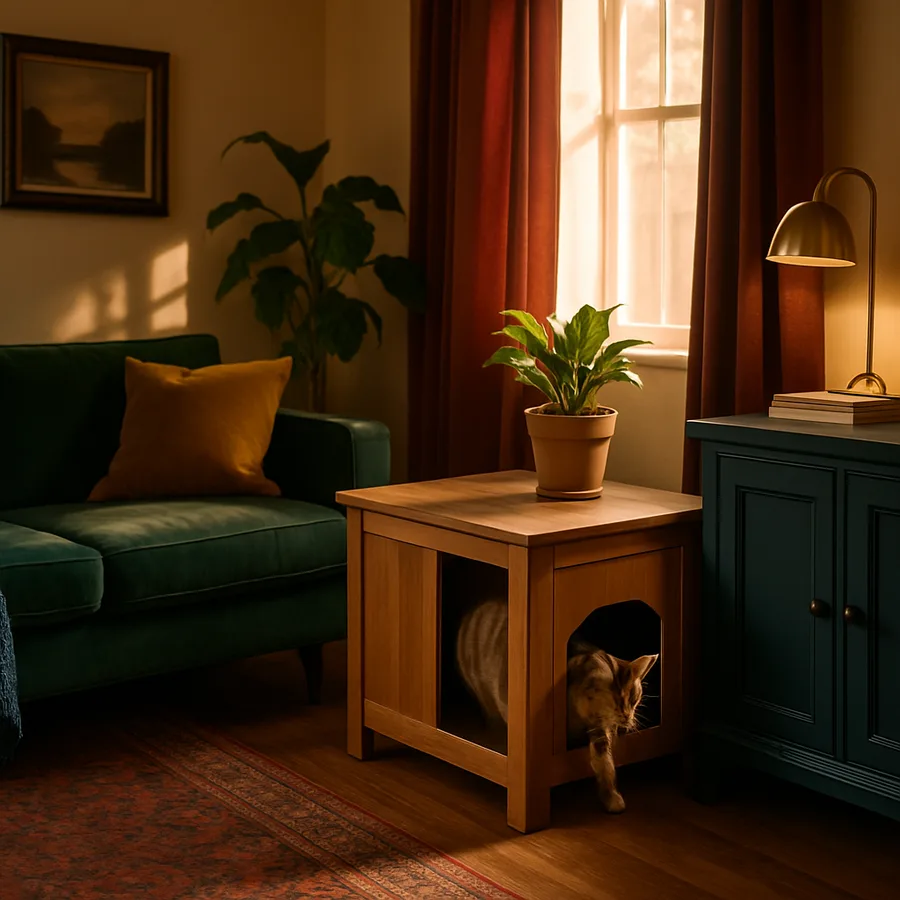
For cat owners, few interior design challenges feel as eternal and unforgiving as the litter box. It is functional, it is essential, and it is almost always visually intrusive. The good news is that the past several years have seen an explosion of clever solutions that hide the litter box inside benches, sideboards, console tables, and dedicated cat cabinets, all designed to look like ordinary furniture while quietly accommodating the daily realities of feline life. According to the American Veterinary Medical Association, more than 45 million U.S. households share their lives with at least one cat, and a meaningful share of those households are now seeking design solutions that respect both the animal's behavioral needs and the human's aesthetic standards.
This guide explores the design language, dimensional planning, ventilation engineering, and behavioral considerations that go into a successful hidden litter box installation. Whether you are buying a ready-made cat-friendly bench, commissioning a custom cabinet, or modifying an existing piece of furniture, the principles below will help you create a solution that genuinely works rather than merely looks good in photos.
Why Hidden Litter Furniture Has Reached a Tipping Point
Concealing the litter box used to mean draping a towel over a plastic dome or stuffing the box into a closet that nobody could quite open without holding their breath. Today, the category has matured into genuinely beautiful furniture, available at price points ranging from a couple hundred dollars for an off-the-shelf shaker-style cabinet to several thousand for a fully bespoke walnut bench with internal ventilation, motion-activated lighting, and an integrated odor management system.
The shift reflects a deeper change in how pet owners think about their homes. We no longer treat pet products as a tolerated compromise, we expect them to integrate into the same design language as everything else in the room. The ASPCA has long emphasized that environmental design profoundly influences feline behavior, and a calmer, more dignified litter setup tends to reduce stress and improve litter box reliability. Their behavioral resources at ASPCA cat care outline the general principles that make a litter station work for the cat, which then become the constraints inside which any hidden furniture solution must operate.
There is also a market signal here worth noting. Several major furniture retailers now stock cat-friendly cabinets in their core catalogs alongside ordinary sideboards and entryway benches, indicating that hidden litter furniture has crossed the threshold from niche product to mainstream design category.
Understanding What Cats Actually Need
Any successful hidden litter setup begins with a clear-eyed understanding of feline behavior, because a beautifully crafted cabinet that the cat refuses to use is not a design success at all. Veterinarians and applied animal behaviorists generally agree on a handful of non-negotiable requirements: the box itself should be at least 1.5 times the length of the cat from nose to base of tail, the entry should be easy to find and free of obstacles, the interior should feel safe but not trap-like with adequate clearance for digging and turning, and the location should be quiet, low-traffic, and reasonably close to where the cat already spends time.
The standard veterinary recommendation, sometimes called the n+1 rule, is to provide one more litter box than you have cats, with at least one box per floor of the home. A two-cat household therefore needs three boxes, ideally distributed across two floors. This has direct implications for hidden furniture design: a single beautiful cabinet may not be enough, and you may need to plan for one piece in the living area, another in a bedroom or hallway, and possibly a third in a basement or laundry room.
The Association of Shelter Veterinarians further notes that uncovered boxes are generally preferred by cats over covered ones, because covers trap odors and can make the cat feel cornered. This creates an important tension for hidden furniture: the human wants the box hidden, the cat may prefer it open. The resolution is in the design itself, with the cabinet acting as the visual cover while the box inside remains uncovered, and large entry holes plus generous internal volume mimic the openness cats actually want.
Bench-Style Concealment for Entryways and Mudrooms
The hidden litter bench has become one of the most popular furniture categories in the cat-friendly home for good reason. A well-proportioned entry bench can absorb a litter box inside its base while providing a useful seating surface above, and the form factor reads as natural in mudrooms, hallways, foyers, and even at the foot of a bed. Typical dimensions run 36 to 48 inches long, 18 to 22 inches deep, and 18 to 20 inches tall, which leaves enough internal volume for a high-sided box and adequate cat clearance.
The cat enters and exits through a side cutout, usually framed in a hardwood doorway about 7 inches wide by 9 inches tall, oriented either at the end of the bench or in the back panel. A magnetic touch-latch panel on one end provides human access for cleaning, while the top is typically a hinged or removable cushion seat. Look for benches that feature a removable, washable interior tray or pan that lifts out cleanly, because no design works for long if the daily cleaning ritual is awkward.
For homes with hardwood or tile floors near the entry, a built-in catch tray with a slight raised lip prevents tracked litter from spreading beyond the bench. Some premium designs incorporate a textured rubber mat just inside the exit hole, which catches granules from paws as the cat walks out. The National Sanitation Foundation notes in its general guidance on indoor environments that minimizing tracked debris improves indoor air quality, and the same principle applies here, both for human health and for keeping the rest of the room visually clean.
Cabinet and Console Solutions for Living Rooms
For living areas where a bench would feel out of place, the hidden litter cabinet steps in as a more substantial piece of furniture that can serve double duty as a media console, sideboard, or end-of-sofa table. The advantage of a cabinet form is greater internal volume, which allows for top-entry boxes, self-cleaning automated boxes that need vertical clearance, or even a small cat litter robot housed comfortably with room for the rotating mechanism.
The most successful living room cabinets borrow proportions from existing furniture vocabulary. A cabinet 30 inches wide by 18 inches deep by 30 to 32 inches tall reads correctly as a side console, while one stretching to 48 or 60 inches wide reads as a sideboard suitable for a dining room or living room wall. The cat entry is typically discreet, often a side cutout disguised as a decorative panel detail, and the front face presents as ordinary doors and drawers.
One detail worth investing in is the internal lining. A coated MDF or melamine interior, sealed at all seams, resists moisture and is easy to wipe clean. Some custom builders specify a removable bottom pan in stainless steel or food-safe HDPE, which can be lifted out entirely for monthly deep cleaning and disinfection. Have you ever opened a piece of pet furniture to discover the interior was raw plywood that had absorbed years of moisture? That is exactly the failure mode a properly specified interior prevents.
Ventilation, Odor Control, and Air Quality
The single biggest functional risk in any hidden litter installation is poor air management. Trapped odors and moisture inside an enclosed cabinet quickly become a problem that no amount of beautiful walnut veneer can mask. The professional solution combines passive ventilation with active filtration, both engineered into the cabinet from the start rather than added as an afterthought.
Passive ventilation works through the same chimney principle used in built-in animal habitats: a low intake vent on one side of the cabinet and a higher exhaust vent on the opposite side allow ambient air to flow through the enclosure naturally. Both vents should be screened to prevent the cat from squeezing into nooks it does not belong, and the exhaust can be dressed with a decorative metal grille that reads as ornament rather than utility.
Active filtration involves a small in-line fan, often 80 millimeters and rated under 25 decibels for whisper-quiet operation, paired with a replaceable activated carbon filter. The fan can run continuously on a low setting or be tied to a motion sensor that activates after the cat exits. The U.S. Environmental Protection Agency publishes detailed guidance on indoor air quality and the role of activated carbon in adsorbing volatile organic compounds, and that science applies directly to the litter box environment. Their resource at EPA indoor air quality covers the broader principles that any pet furniture designer should internalize.
One additional consideration is dust control. Even high-quality clumping litters generate fine particulates as the cat digs, and these particulates can become airborne and migrate out through the entry hole. A high-efficiency particulate filter integrated into the active ventilation circuit captures the bulk of this dust before it reaches the room, contributing to noticeably better indoor air quality.
Materials, Finishes, and Maintenance Realities
The materials that work for ordinary furniture are not always the right choice for litter furniture. Solid hardwood is beautiful but expensive and can stain or warp if liquid escapes the litter pan. High-quality plywood with a hardwood veneer face offers better dimensional stability at lower cost. Painted MDF works well for budget-conscious projects as long as all interior surfaces are sealed with a moisture-resistant primer and topcoat.
Hardware deserves particular attention. Soft-close hinges and drawer slides feel like a luxury until you realize that cats are easily startled by sudden noises near their litter station, and a slamming door can create a behavioral aversion that is difficult to undo. Spend a few extra dollars on European-style hinges with soft-close mechanisms and on full-extension drawer slides for any pull-out cleaning trays.
Maintenance is the truest test of any design. Plan for a daily scoop, a weekly tray cleaning, and a monthly deep clean of the entire interior. The piece should make all three of these tasks faster than a freestanding box would, not slower. If you find yourself dreading the cleaning ritual, the design has failed regardless of how beautiful the cabinet looks. Are you willing to commit to consistent maintenance, or do you need a self-cleaning automated box housed inside the furniture? Honest answers up front prevent disappointment six months in.
Conclusion
Hiding a litter box inside thoughtfully designed furniture is one of the highest-return interior design moves available to a cat household. The visual transformation is immediate, replacing a plastic intrusion with a piece that contributes positively to the room's composition, and the functional benefits accrue over years, with reduced odor, less tracked litter, calmer cats, and a generally more harmonious living environment. The key is to approach the project with the same rigor you would apply to any other piece of furniture, considering proportion, materials, hardware, and the daily workflows the piece will support.
The science of feline behavior reminds us that the cat must be the first design client, with the human aesthetic following close behind. A box that the cat refuses to use is not a design success, and the entire project depends on getting the dimensions, the entry geometry, the location, and the internal openness right before the millwork ever takes shape. Once those fundamentals are settled, the visual language can take over, with hardware, finishes, and proportions chosen to harmonize with the rest of the room.
Owners who make this transition consistently describe a small but meaningful improvement in their daily quality of life. The litter box stops being a thing you avoid looking at and becomes a piece of furniture you actually enjoy, while the cat gains a calmer, more private space that supports better behavioral outcomes. That alignment of human and animal interests is the entire point of thoughtful pet-focused design.
If you are ready to make the change, start by measuring the spaces in your home where a bench, console, or cabinet could realistically live, photograph the rooms you want the new piece to harmonize with, and bring those measurements to either a custom cabinetmaker or a curated catalog of cat-friendly furniture. Within a single afternoon of focused planning, you can specify a piece that will quietly reshape how your home looks and how your cat experiences it for many years to come.
More Articles You May Like
Comments
Post a Comment